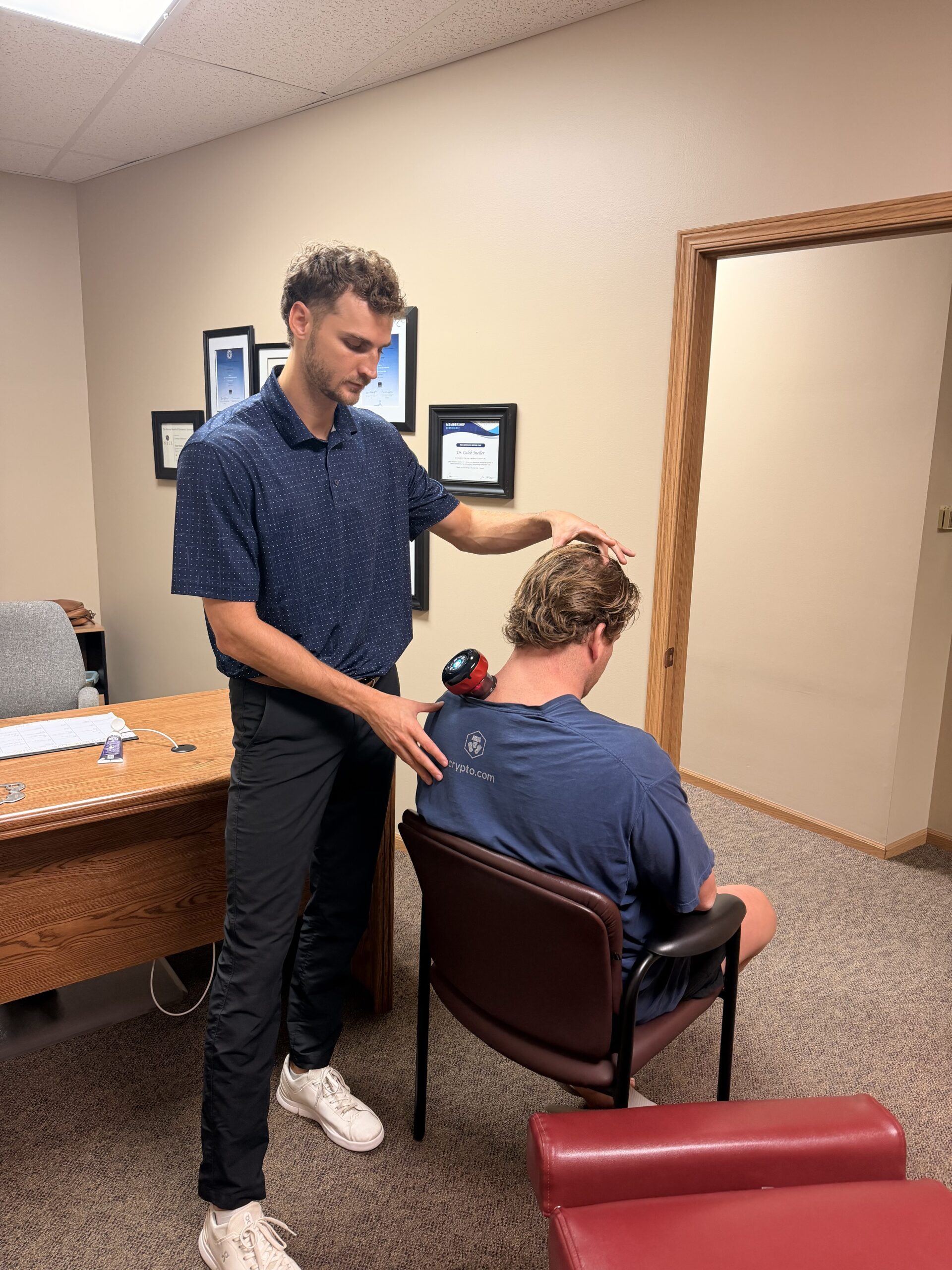
Soft tissue therapy includes hands-on and instrument-assisted treatments used to address muscles, tendons, fascia, and other soft tissues that may be contributing to pain, stiffness, or limited movement.
At West Des Moines Chiropractic, we may use techniques such as instrument-assisted soft tissue mobilization (IASTM or “scraping”), cupping, myofascial release, and neuromuscular re-education as part of a larger treatment plan.
The goal isn’t simply to loosen a tight muscle. We want to understand why an area is painful or restricted and determine which combination of treatment, movement, and exercise makes the most sense for you.
What Is Soft Tissue Therapy?
Soft tissue therapy is a broad term for treatments directed at muscles, tendons, fascia, and other connective tissues.
Depending on the problem, these techniques may be used to temporarily reduce pain or sensitivity, improve comfortable range of motion, and make it easier to progress into exercise and normal activity.
Soft tissue therapy is often most useful when combined with rehabilitation, strengthening, mobility work, or other treatment rather than relied on by itself.
What Soft Tissue Techniques Do We Use?
Instrument-Assisted Soft Tissue Mobilization (IASTM / Scraping)
IASTM uses specialized tools that are moved across the skin over muscles, tendons, and other soft tissues. Patients sometimes refer to this treatment as “scraping.”
It may be used to help reduce pain and improve mobility or range of motion in certain musculoskeletal conditions.
Despite a common explanation you may hear, the goal isn’t to aggressively “break up scar tissue.” We use IASTM as another way to work with sensitive or restricted tissues while also addressing the movement, strength, or loading issues that may be contributing to the problem.
Cupping Therapy
Cupping uses small cups placed on the skin to create suction over an area of muscle or soft tissue.
Some patients find that cupping temporarily decreases soreness, tightness, or discomfort and makes movement feel easier.
Cupping can leave circular marks on the skin for several days. These marks are a normal response to the suction and do not mean that “toxins” are being removed from the body.
Myofascial Release and Manual Therapy
Sometimes the best tool is simply our hands.
Myofascial release and other manual soft tissue techniques use pressure, movement, and stretching to work with areas of muscular tenderness, tightness, or restricted movement.
The amount of pressure and technique used can be adjusted based on the area being treated and your comfort level.
Neuromuscular Re-Education
Feeling better is only part of the goal. We also want the area to function better.
When weakness, poor coordination, altered movement, or difficulty controlling a muscle is contributing to the problem, treatment may include neuromuscular re-education.
This can involve:
- Strength and stability exercises
- Balance and coordination work
- Movement retraining
- Mobility exercises
- Postural or movement awareness
- Home exercises
The goal is to help your body use the improved movement we gain during treatment rather than relying entirely on passive care.
What Conditions May Benefit From Soft Tissue Therapy?
Soft tissue therapy may be incorporated into care for problems such as:
- Muscle strains and soreness
- Tendon-related pain and tendinopathies
- Sports and overuse injuries
- Tennis elbow and golfer’s elbow
- Shoulder pain
- Hip and gluteal pain
- Plantar heel pain
- Neck and upper-back tightness
- Restricted mobility
- Muscle tightness associated with back or neck pain
The appropriate treatment depends on what is actually contributing to your symptoms. Having tight or painful muscles does not automatically mean that soft tissue treatment is the only thing you need.
Is Soft Tissue Therapy Used With Chiropractic Care?
Yes, when appropriate.
Chiropractic adjustments primarily address joint movement, while soft tissue techniques can be used to address muscles, tendons, and surrounding tissues. Exercise and rehabilitation can then help address strength, mobility, and movement.
For many patients, using these approaches together makes more sense than relying on one treatment alone.
We look at adjustments, soft tissue therapy, rehabilitation, spinal decompression, laser therapy, and the other treatments available in our office as different tools in the toolbox.
The goal is to determine which tools make sense for your particular problem and help you make meaningful progress as efficiently as possible.
Do I Need Soft Tissue Therapy?
Not necessarily.
Some problems respond well to soft tissue treatment, while others need more emphasis on joint mobility, strengthening, exercise, or another approach.
Your treatment recommendations are based on your symptoms, examination findings, goals, and response to care rather than automatically performing soft tissue work at every visit.
Soft Tissue Therapy in West Des Moines
If you’re dealing with muscle or tendon pain, tightness, limited mobility, or a sports or overuse injury, soft tissue therapy may be one part of your treatment plan.
Contact West Des Moines Chiropractic to schedule an evaluation and determine which treatment options may be appropriate for your problem.
At West Des Moines Chiropractic Clinic, P.C. in West Des Moines, IA, we believe in empowering our patients to manage their health care and make the best choices possible. Feel free to contact us at
(515) 267-1600 to schedule a consultation and learn more about how we can help you find relief from your pain and injuries. We are here to help you!